C-Max Tire
How to tell if tires are dry rotted is not simply a matter of checking tread depth. A tire may still show deep grooves while its rubber quietly hardens, cracks, and loses flexibility. That hidden aging can change how the tire grips wet pavement, absorbs pothole impacts, and responds during sudden braking. Matt Edmonds, executive vice president at Tire Rack, has emphasized, “Tread depth is not the whole story.” His warning matters because a polished-looking tire can still carry serious age-related risks.
Look closely at the sidewalls. Search for fine spiderweb cracks, especially around raised lettering, the bead, and between tread blocks. Pressing the rubber gently may reveal a dry, brittle texture. Watch for chunks missing from the tread, exposed cords, bulges, or uneven cracking around the rim. These details are more meaningful than appearance alone. A tire that feels stiff deserves attention.
Check the DOT code on the sidewall, too. The final four digits show the production week and year. For example, 2319 means the tire was made during the twenty-third week of 2019. Age is not an automatic verdict, but it is an important warning sign. Storage, sunlight, heat, inflation, and driving habits all affect deterioration.
Do not rely on guesswork. Have a qualified tire professional inspect questionable tires before a long trip. A small crack may seem harmless. It may not be. Even careful drivers can miss damage hidden on the inner sidewall. This guide explains the visible clues, common mistakes, and practical safety decisions involved in identifying dry rot.
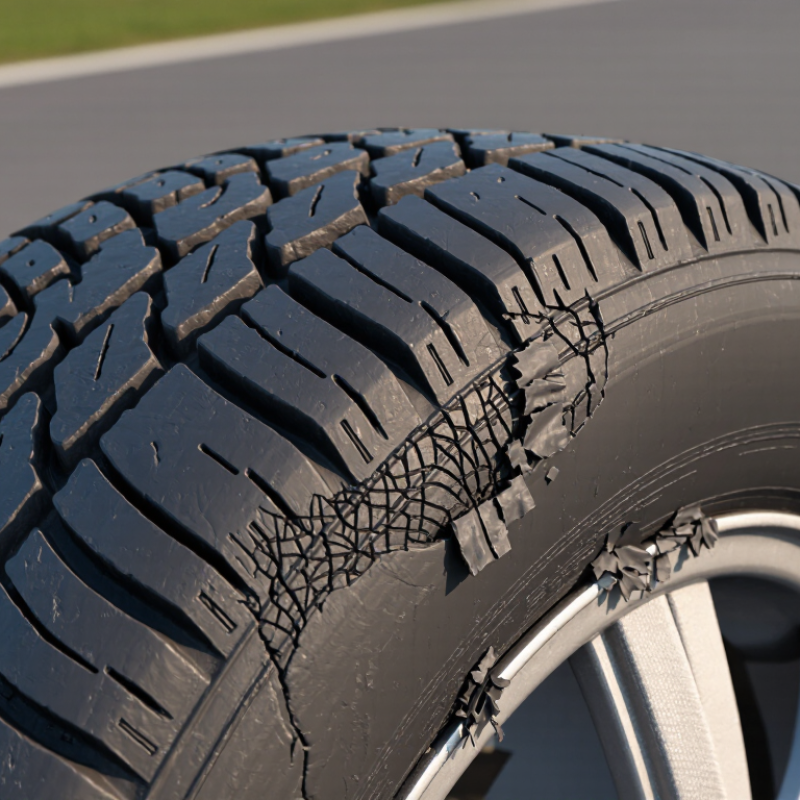
Tire dry rot is rubber deterioration caused by oxygen, ozone, sunlight, heat, and age. The rubber loses flexibility before the tread necessarily disappears. Look closely at the sidewalls and between tread blocks. Fine spiderweb cracks, gray discoloration, a hard glossy surface, or small splits around the rim are warning signs. A bulge, repeated air loss, or new vibration demands immediate attention. A small crack can look harmless.
The tire’s date code also matters. The final four digits show the production week and year. NHTSA’s Traffic Safety Facts 2017 recorded 738 deaths and about 32,000 injuries in tire-related crashes. Those figures do not prove dry rot caused each crash, but they show why condition deserves more than a tread-depth check.
The U.S. Tire Manufacturers Association advises regular inspections and notes that aging can weaken internal components. I would not treat deep tread as proof of safety.
Dry-rotted tires may fail during highway heat, hard cornering, or sudden braking. Check cold inflation pressure, but never use pressure alone to judge tire health. A qualified technician should inspect cracks, casing condition, bead areas, and possible tread separation.
Do not scrape away surface cracks or cover them with cosmetic products. Replacement may be necessary even when the tire still looks usable. Storage history matters too; a tire kept beside a sunny window can age faster than expected. That part is easy to overlook.
Dry rot often begins where drivers rarely look. Inspect the entire sidewall, not only the visible outer face. Look for fine, spiderweb-like cracks around raised lettering, the rim edge, and the valve stem. Deep cracks, exposed cords, or swelling indicate serious structural damage. The U.S. National Highway Traffic Safety Administration reports about 11,000 tire-related crashes each year, showing why surface details deserve attention.
Check between every tread block and inside the grooves. Dry-rotted rubber may appear gray, brittle, or split like old paint. Run a flashlight across the tread shoulders, where uneven wear can hide cracking. Then inspect the inner sidewall from behind the wheel, if safely accessible. I have seen this area overlooked because the outer sidewall looked acceptable. A quick glance is not enough. Also read the tire’s date code. Industry guidance from the U.S. Tire Manufacturers Association recommends professional inspections after five years in service and replacement at ten years, regardless of tread depth.
Tips: Clean dirt from the rubber first, but never use harsh solvents. Photograph suspicious cracks for comparison. Pressing the tread with a finger is not a reliable safety test. If cracks reach the cords, or the tire has bulges, vibration, or repeated air loss, stop driving and request a qualified inspection. NHTSA and tire-safety guidance both emphasize routine pressure checks, because underinflation increases heat and may accelerate aging. Surface appearance can mislead. Get a second opinion when uncertain.
Dry rot can make a tire unsafe even when the tread still looks usable. During a careful inspection, park on a level surface and turn the steering wheel for better access. Use a bright flashlight, because shallow cracks often disappear in weak light.
Examine both sidewalls closely. Look for fine spiderweb cracks, long splits, raised bubbles, or patches that feel unusually stiff. Flex the sidewall slightly with your fingers, but do not force it. Cracking around raised lettering deserves attention. Check the tread grooves for small cracks, missing rubber, uneven wear, and exposed cords. A tire may still have acceptable tread depth while its rubber has aged badly. It happens more often than people expect.
The bead area needs careful attention too. This is where the tire seals against the wheel rim. Look for cracked rubber, peeling sections, rust marks, or air leaks near the rim. Never try to remove a tire from its wheel without proper equipment. A damaged bead can fail during inflation. Visual checks are not perfect. Dirt, poor lighting, and wheel covers can hide defects. If you notice deep cracks, bulges, repeated pressure loss, or damaged cords, stop driving and request an inspection from a qualified tire technician. When in doubt, treat the tire as unsafe rather than testing it on the road.
Dry rot can make a tire unsafe even when its tread still looks deep. Look for fine cracks on the sidewall, between tread blocks, or around the rim. Deeper cracks, raised bubbles, exposed cords, uneven bulges, or tread separation require immediate replacement. NHTSA reported an average of 738 deaths yearly in tire-related crashes from 2000 to 2015. That figure shows why appearance alone cannot prove safety.
Judge whether dry-rotted tires can be driven on by checking their age, damage, and behavior. Read the last four digits of the tire identification code. They show the production week and year. NHTSA notes that many tire makers recommend replacement after six to ten years, regardless of tread depth. A vibrating steering wheel, repeated pressure loss, or pulling during braking adds serious concern. Do not drive on a tire with exposed cords, a bulge, deep cracking, or separated tread. Arrange professional inspection or towing instead. Minor surface lines may not mean immediate failure, but this judgment is easy to get wrong.
Tips: Park in bright light and clean the sidewalls first. Press a fingernail near a crack; softness, spreading, or visible fabric needs expert attention. Check all four tires, including the spare. A tire shop should inspect internal damage, pressure, alignment, and age. If uncertainty remains, replace the tire rather than testing it on a highway.
| Inspection Area | What to Look For | Risk Level | Can You Drive on the Tire? | Recommended Action |
|---|---|---|---|---|
| Sidewall surface | Fine, shallow lines or a dry, faded appearance, especially between the raised lettering and along the upper sidewall. | Early aging | Short, cautious trips may be possible if there are no bulges, exposed cords, deep cracks, or air-pressure problems. | Have the tire inspected soon and check its pressure regularly. Avoid treating surface appearance alone as a safety clearance. |
| Deep sidewall cracks | Cracks that are wide, branching, deep, or extend into the rubber structure; cracks may also appear inside the grooves or between tread blocks. | High risk | No. Deep cracking can weaken the casing and increase the risk of air loss or tire failure. | Replace the tire before driving, using professional roadside assistance if necessary. |
| Bulges, bubbles, or deformities | A localized outward bulge on the sidewall or tread, often caused by internal cord damage from an impact or severe underinflation. | Critical | No. A bulge indicates internal structural damage that cannot be repaired safely. | Do not drive on it. Install the spare or arrange professional transportation and replacement. |
| Tread separation or lifted rubber | Tread pieces lifting away from the casing, an unusual ridge, detached rubber, or a visible gap between tread sections. | Critical | No. The tread may separate further while the vehicle is moving. | Stop using the tire and have it replaced immediately. |
| Exposed cords or fabric | Steel belts, textile cords, or other internal reinforcement visible through cracks, cuts, or worn tread. | Unsafe | No. Exposed reinforcement means the protective rubber has been compromised. | Replace the tire immediately. Do not attempt to seal or patch exposed structural material. |
| Tread depth | Tread is close to the wear indicators, visibly uneven, or worn smooth. In the United States, tread-wear indicators are generally set at 2/32 inch, or about 1.6 mm. | Replace soon | Driving may be unsafe, particularly in rain, snow, or at highway speed. Legal limits vary by location. | Measure the tread and replace the tire when it reaches the applicable legal or safety limit. |
| Manufacturing age | The final four digits of the DOT identification code show the production week and year; for example, “3521” means the 35th week of 2021. | Age-related risk | Age alone does not prove immediate failure, but older tires require more frequent professional inspection. | Many tire-safety guidelines recommend increased inspections after five years and replacement by approximately six to ten years, regardless of remaining tread. |
| Air-pressure loss | Repeated pressure loss, a tire that looks visibly low, or pressure that drops without an obvious puncture. | Do not ignore | Do not continue driving until the cause is identified. Underinflation generates heat and accelerates structural damage. | Check pressure when the tire is cold and have the tire, valve, and wheel inspected by a qualified technician. |
| Vibration, pulling, or unusual noise | New shaking, rhythmic thumping, steering pull, or humming that begins after visible tire aging or impact damage. | Inspection required | Reduce speed and avoid highway driving until the cause is confirmed. | Arrange a professional inspection for tire damage, wheel imbalance, alignment problems, or suspension issues. |
| Minor surface cracking only | Very small cosmetic lines with no bulge, exposed cord, tread separation, air loss, or handling change. | Monitor closely | Driving may be possible temporarily, but the tire should not be considered fully safe without an inspection. | Photograph the cracks, monitor their progression, maintain correct cold inflation pressure, and plan a professional evaluation or replacement. |
Dry rot is not simply a dusty sidewall. It is rubber damage caused by age, heat, ozone, sunlight, and long periods of parking. Look for fine cracks between tread blocks, around the sidewall lettering, or inside the grooves. Run a light across the rubber. Cracks that widen when the tire flexes deserve immediate attention.
The National Highway Traffic Safety Administration’s Tire Aging report connects aging with reduced elasticity and higher failure risk. The U.S. Tire Manufacturers Association advises annual professional inspections after five years and replacement at ten years, regardless of tread depth. That limit is guidance, not a guarantee. Replace tires sooner when cracks are deep, cords are visible, rubber is peeling, or the sidewall has a bulge. Persistent vibration, air loss, or uneven wear also requires inspection. Do not wait for a flat. Mileage alone can mislead even careful owners.
NHTSA recommends checking pressure monthly, with the tires cold. Underinflation creates heat, accelerating internal damage and shoulder wear. Store unused tires away from direct sunlight, moisture, solvents, and electric motors that produce ozone. Keep them off hot asphalt when possible. A visual check is useful, but imperfect. A qualified technician can uncover damage hidden beneath the tread or inside the casing, especially after a hard impact. Record the DOT production date, inspection findings, and pressure readings. Small records can prevent a large mistake.
Check the entire sidewall, including the inner sidewall. Look around raised lettering, the rim edge, and the valve stem. Cracks can hide there.
Look for gray, brittle rubber and fine, spiderweb-like cracks. Inspect between tread blocks and inside the grooves. Old paint-like splits are warning signs.
Replace tires with deep cracks, exposed cords, bulges, or separated tread. Do not keep driving on them. Safety comes first.
Yes. Dry rot may weaken rubber beneath healthy-looking tread. Surface appearance cannot prove structural safety. Tread depth alone misleads.
Read the last four digits of the tire identification code. They show the production week and year. Seek professional inspection after five years in service. Many recommendations suggest replacement between six and ten years.
Watch for steering-wheel vibration, repeated air loss, pulling, or uneven wear. These symptoms need prompt inspection. Do not test the tire on a highway.
Park in bright light and clean dirt from the rubber. Use a flashlight across the shoulders and tread grooves. Check all four tires and the spare. A quick glance can fool me.
No. Finger pressure cannot reveal every internal defect. A soft or spreading crack deserves professional attention. I might miss hidden damage. When uncertain, choose inspection or replacement.
Dry rot is a form of rubber deterioration caused by age, heat, sunlight, low use, and improper storage. It makes tire rubber hard, brittle, and more likely to crack or separate, increasing the risk of air loss, tread failure, or a blowout. To understand how to tell if tires are dry rotted, inspect the sidewalls, tread grooves, shoulders, and bead areas for fine surface cracks, deep splits, bulges, peeling, or exposed reinforcing material. Also check for uneven hardness or deformation, especially around the rim.
Minor surface lines may not always require immediate removal, but tires with deep cracks, spreading damage, exposed cords, bulges, significant aging, or repeated air loss should not be driven on. Have questionable tires assessed by a qualified professional and replace them when the damage compromises their structure. To prevent further deterioration, keep tires properly inflated, protect them from prolonged sunlight and heat, avoid harsh chemicals, and store them in a cool, dry place when not in use.
